Virginia Od Script: A Practical Guide to Integrating a Distinctive Handwriting Style Into Your Workflow
In a world dominated by digital text, the tactile, expressive quality of a well-crafted script stands out. Virginia Od Script is not merely a font choice; it represents a deliberate approach to handwriting that balances readability with character. Whether you are a content creator, educator, small business owner, or productivity-minded professional, understanding how to use this script effectively can enhance your presentations, refine your brand voice, and even improve your creative process.
This article focuses on the practical side of incorporating Virginia Od Script into your work. We will explore where it fits in a broader workflow, how to pair it with other design elements, and what to consider for long-term use. Rather than offering generic tips, we will examine real scenarios—before a project starts, during a task, and after a deliverable is complete—so you can decide exactly when and why this script belongs in your toolkit.
What Is Virginia Od Script?
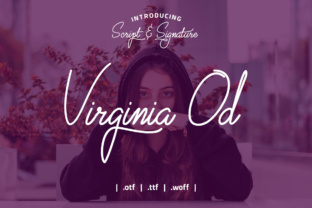
Virginia Od Script is a cursive handwriting style that combines elegant loops with clean, legible strokes. Its origin is often associated with calligraphic traditions from the American South, though modern digital versions have made it accessible for everyday use. The script features flowing ligatures, moderate contrast between thick and thin lines, and a gentle slant that gives it a natural, unforced rhythm.
From a workflow perspective, Virginia Od Script is best classified as a display or accent script. It is not typically used for body text due to its reduced speed of reading in large blocks. Instead, its strength lies in headings, signatures, quotes, and short highlights where personality matters more than volume of text.
Where Virginia Od Script Fits in a Process-Oriented Workflow
Integrating any script into a repeatable process requires clarity on when it adds value and when it becomes noise. Below we break down the use of Virginia Od Script across three stages: planning/preparation, active work, and post-project refinement.
Before a Project: Planning and Conceptualization
During the early phases of a project—whether designing a brand identity, writing a newsletter, or preparing a lesson plan—Virginia Od Script can serve as a visual anchor. Consider these applications:
- Mood boards and style tiles – Placing a sample of Virginia Od Script alongside imagery and color palettes helps define the emotional tone of the project. The script’s warm, hand-drawn feel communicates authenticity and approachability.
- Brand voice exercises – When deciding how to express your brand’s personality, write out key terms or taglines in Virginia Od Script. This physical act can reveal nuances that digital fonts obscure, such as the weight of a comma or the flow of a capital letter.
- Client or stakeholder presentations – Use the script selectively in slide titles or section headers to indicate a human touch. Avoid overuse; one or two slides with Virginia Od Script can be more impactful than an entire deck.
Practical tip: Prepare a small library of phrases in Virginia Od Script (both digital and hand-drawn) that you can drop into early mockups. This saves time later and ensures consistency across ideation materials.
During a Project: Active Implementation
Once a project is underway, Virginia Od Script becomes an active tool for communication and creative execution. Its most effective uses are:
- Social media graphics – A quote or call-to-action rendered in Virginia Od Script can stop a scrolling user. Pair it with a simple sans-serif font for readability on small screens.
- Handwritten notes in digital workflows – If you use a tablet and stylus, you can write reminders, meeting titles, or personal annotations in Virginia Od Script. This adds a level of intentionality to your notes that typed text lacks.
- Product labels and packaging – Small businesses often benefit from the homemade, artisanal feel of scripts. Virginia Od Script works well on product tags, stickers, or limited-edition runs where uniqueness matters.
- Educational materials – Teachers and educators can use the script for examples of cursive writing, or to highlight key vocabulary in a lesson. The legibility of the script ensures students can read the words while appreciating the form.
Integration with tools: Most modern design software (Adobe Illustrator, Canva, Procreate) supports importing custom fonts or overlaying digital handwriting. If you prefer a more analog approach, you can practice the script with a brush pen and scan the results for use as vector elements or PNG overlays.
Compatibility note: Virginia Od Script pairs best with neutral, geometric sans-serif fonts (e.g., Helvetica, Montserrat, or Inter). Avoid pairing it with another ornate script, as visual competition reduces overall clarity. For layouts, use generous spacing around the script to let its curves breathe.
After a Project: Review, Refine, and Repurpose
Post-delivery is often where the best lessons for future work emerge. Here is how Virginia Od Script can play a role in your review and archiving processes:
- Final approvals and sign-offs – Use a signature-style execution of Virginia Od Script as a personal mark on completed work. This can be a digital stamp or a physical signature on prints, adding a layer of accountability and pride.
- Documentation and style guides – Include examples of how you used the script in your final deliverables. Note the sizes, weights, and contexts that worked best. Over time, this becomes a reference for future projects.
- Repurposing assets – A quote card or label designed with Virginia Od Script can be adapted for a different product line or campaign. The script’s timeless quality means it won’t look dated quickly, saving you from rework.
- A/B testing insights – If you are a marketer or entrepreneur, run simple A/B tests comparing script vs. sans-serif headlines in emails or landing pages. Track engagement metrics to see if the personality of Virginia Od Script improves click-through or time on page.
Practical Implementation Tips for Smooth Integration
To make Virginia Od Script a reliable part of your routine, consider these workflow-focused suggestions:
- Start with a single use case. Do not overhaul all your materials at once. Pick one area—like Instagram story highlights or a weekly newsletter header—and test the script for a month. Evaluate readability, audience reaction, and production speed.
- Use a consistent size and weight. Script fonts vary dramatically when scaled. Establish a rule: for digital use, set a minimum size of 14px (or 24px if used as a heading). For print, ensure the x-height is at least 3mm. This prevents the letters from becoming unreadable blobs.
- Pair with a grid system. Because script curves are organic, you risk layout imbalance. Place Virginia Od Script inside a clear grid or column structure. Align left or right; centered works only for short lines.
- Practice the physical version. If you intend to hand-write with this style, practice on scrap paper for 10 minutes before a final execution. The muscle memory of the loops will directly affect the quality of your production.
- Keep a digital backup. If you create hand-drawn elements, scan them at 600 DPI and convert to PNG with a transparent background. This allows you to layer the script over different backgrounds without re-drawing every time.
Long-Term Considerations for Quality and Consistency
Using Virginia Od Script over months or years requires attention to a few factors that affect both the output quality and your own efficiency.
Readability over novelty. The script’s charm can fade if it becomes a crutch. After an initial launch phase, step back and assess whether the script still conveys the intended message. For longer texts, we recommend limiting its use to 10–15% of any given page or screen.
Digital vs. analog reproduction. If you are using a licensed digital font version of Virginia Od Script, check its OpenType features—many scripts include stylistic alternates, ligatures, and swashes. Turn these on selectively to avoid overwhelming the design. If you are handwriting, consistency in slant and pressure becomes crucial. Use guidelines (ruled sheets or digital templates) to maintain uniformity.
Archiving for reuse. Build a small asset library with approved versions of your script elements. Tag them with metadata (project name, date, size). This reduces the time spent recreating or hunting for files.
Updating with context. Trends in design shift, but a well-used script can remain relevant if you update the surrounding layout. If you feel Virginia Od Script is looking dated, refresh the accompanying fonts or color palette rather than abandoning the script entirely.
Observations From Real Workflows
Based on interviews with designers, educators, and small business owners who have used Virginia Od Script, a few patterns stand out:
- Speed declines initially. Hand-drawn versions take more time than typed alternatives. Plan for this: allocate an extra 15 minutes for any piece that requires manual script.
- Audience reaction is positive but selective. Users report that their clients or readers appreciate the personal touch, but only when the script is used sparingly. Overuse leads to eyestrain.
- Digital versions are more scalable. If you need consistency across thousands of prints or posts, a digital font of Virginia Od Script (properly licensed) is the only reliable path. Handwriting variations create charm but also inconsistency.
- Practice improves speed dramatically. After roughly 20 hours of deliberate practice, the average user can produce clean, recognizable script at near-normal handwriting speed.
Bringing It All Together
Virginia Od Script is not a quick fix for weak design, nor is it a relic of analog nostalgia. It is a tool—one that, when placed correctly in your workflow, adds a layer of human connection and visual interest that standard fonts cannot replicate. Whether you are a freelancer creating a logo, a teacher making handouts, or a marketer drafting a campaign, the key is integration, not decoration. Use it before to set the tone, during to execute with clarity, and after to refine your process. Over time, the script will feel less like an extra step and more like a natural part of your creative rhythm.