Unveiling the Reghinatha Script: Origins, Structure, and Contemporary Significance
Writing systems are among humanity's most profound inventions, serving as bridges between spoken language and recorded knowledge. Among the world's many scripts, some are widely known—like Latin, Devanagari, or Arabic—while others remain hidden in specialized circles or regional history. The Reghinatha Script is one such lesser-known yet fascinating writing system, rich in structure, purpose, and cultural meaning. Whether you are a language enthusiast, a student of comparative linguistics, or simply curious about how scripts shape communication, this article will guide you through the essentials of the Reghinatha Script and its relevance today.
What Is the Reghinatha Script?
The Reghinatha Script is a phonetic writing system historically used in parts of South Asia, particularly in regions where classical languages and local dialects intersected. Its name derives from the words "Reghin" (often interpreted as "structured" or "ordered") and "natha" (meaning "master" or "lord"), reflecting its design as a carefully organized script meant to accurately represent spoken sounds. While not as globally dominant as other scripts, it has played a key role in local administration, religious texts, and literary traditions for centuries.
Distinctive Features
- Syllabic-alphabetic hybrid: Like many Brahmi-derived scripts, the Reghinatha Script uses consonant-vowel combinations as base units, but also includes independent vowel signs.
- Left-to-right directionality: Unlike some ancient scripts that varied in direction, Reghinatha is consistently written from left to right.
- Modular character shapes: Characters are built from repeating stroke patterns, making the script relatively easy to learn once the core shapes are mastered.
- Regional variations: Over time, different communities adapted the script to suit local phonologies, leading to subtle but important differences in character sets.
The Purpose and Significance of the Reghinatha Script
Every writing system emerges to solve a problem: how to record language reliably. The Reghinatha Script was no exception. Its primary purpose was to capture the sounds of spoken language with a high degree of fidelity, enabling accurate transmission of sacred texts, legal documents, and literary works across generations. Unlike some scripts that prioritized decorative forms over phonetic precision, Reghinatha was engineered for clarity and consistency.
Religious and Educational Context
Historically, the Reghinatha Script was used to transcribe hymns, philosophical treatises, and instructional manuals. Monasteries and village schools taught the script as part of basic literacy, often on palm leaves or handmade paper. The script's systematic nature made it especially suitable for memorization—a key skill in oral traditions where texts were recited and passed down.
Administrative and Legal Use
Local kingdoms and chieftains used Reghinatha for land records, tax registers, and legal judgments. Its precision helped reduce ambiguity in contracts and official communications. Even today, some older property deeds in certain regions still bear characters from this script, serving as historical links to earlier governance systems.
How the Reghinatha Script Fits Into Modern Life
At first glance, a centuries-old script might seem irrelevant in today's digital, globalized world. However, the Reghinatha Script continues to find surprising relevance across several domains.
Cultural Heritage and Identity
For communities that historically used the Reghinatha Script, it remains a symbol of identity and continuity. Festivals, cultural events, and heritage projects often feature the script in banners, certificates, and commemorative publications. Learning to read or write even basic characters has become a way for younger generations to connect with their ancestry.
Calligraphy and Creative Arts
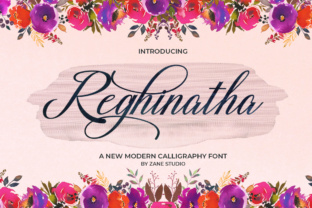
Artists and calligraphers have rediscovered the visual appeal of Reghinatha's flowing strokes and balanced compositions. Modern calligraphy workshops sometimes include modules on historical scripts, and Reghinatha's unique aesthetic lends itself well to decorative pieces, logos, and typographic experiments. The script appears in contemporary art installations that explore themes of memory, language, and time.
Academic and Linguistic Research
Linguists study the Reghinatha Script to understand how writing systems evolve. Its phonetic structure offers insights into historical pronunciation and dialect variation. Researchers in comparative philology use it as a case study for how scripts can influence literacy rates and educational practices. In university courses on writing systems, Reghinatha is sometimes contrasted with other syllabaries to highlight different design philosophies.
Practical Relevance in Business, Education, and Technology
While the Reghinatha Script is not widely used in mainstream commerce or daily digital communication, its influence and applications extend into several practical areas.
Business and Branding
Some businesses operating in regions with historical ties to the script incorporate Reghinatha characters into their branding. A logo that includes a stylized character can evoke tradition, trust, and authenticity. For example, a local spice company or a heritage hotel might use the script in its signage to signal roots in local culture.
Education and Literacy Programs
In certain educational initiatives aimed at preserving regional languages, the Reghinatha Script is taught alongside more dominant scripts. These programs often emphasize that learning a historical script can deepen understanding of language structure and improve cognitive flexibility. Children exposed to multiple writing systems tend to develop stronger metalinguistic awareness—a benefit that extends to learning other subjects.
Technology and Digitization
Digitization efforts have brought the Reghinatha Script into the digital age. Fonts are being designed for Unicode compatibility, enabling users to type and display the script on computers and smartphones. Online archives now preserve scanned manuscripts and offer searchable transcripts. These technological advances ensure that the script is not lost to time and can be studied or used by anyone, anywhere.
Clarifying Common Misunderstandings
As with any specialized topic, the Reghinatha Script is surrounded by a few assumptions that deserve clarification.
Myth: It Is a Dead Script
While the Reghinatha Script is no longer the primary writing system for any large population, it is far from dead. It continues to be used in ceremonial, academic, and heritage contexts. A script does not need to be widely spoken to be alive—it simply needs to be used. By that measure, Reghinatha still has pulse.
Myth: It Is Incomprehensible to Modern Readers
Many characters in the Reghinatha Script share structural similarities with other Brahmi-derived scripts. Someone familiar with Devanagari or Tamil script may recognize certain shapes and phonetic mappings. With some study, motivated learners can decode inscriptions and texts without overwhelming difficulty.
Myth: It Has No Practical Use Today
As outlined above, the script finds use in branding, education, art, and research. Its practical value may not be as obvious as that of English or Chinese writing, but it serves meaningful functions for specific communities and professions. Practicality is context-dependent, and in the right context, Reghinatha is highly practical.
Examples That Bring the Reghinatha Script to Life
To better understand how the script works, consider a few concrete examples.
Example 1: Writing a Simple Word
The word for "peace" in the language historically associated with the Reghinatha Script is shanthi. In the script, this is written as a combination of characters representing "sha," "n," "thi," with the inherent vowel "a" modulated by diacritics. The result is a compact, flowing sequence that visually mirrors the concept of harmony.
Example 2: A Short Phrase
A common greeting like "May you live long" would be written using five to six characters, each built from basic strokes. The sentence structure follows subject-object conventions typical of the region. Someone literate in the script would read the characters left to right, merging consonant-vowel units smoothly.
Example 3: Calligraphic Variation
In artistic renditions, the same phrase can look radically different. A calligrapher might elongate certain strokes, add flourishes at the ends of words, or vary the spacing to create rhythm. These variations are stylistic, not grammatical, and show the script's flexibility.
How to Get Started With the Reghinatha Script
If you are intrigued and want to explore the Reghinatha Script further, here are a few practical steps.
- Find online resources: Look for digitized manuscripts, font downloads, and instructional videos. Some university libraries offer open-access collections.
- Learn the basic characters: Start with the independent vowels and common consonant-vowel combinations. Flashcards can help with memorization.
- Practice writing: Use grid paper to maintain consistent proportions. Focus on stroke order and direction.
- Engage with community: Join forums or social media groups dedicated to historical scripts. Sharing progress and asking questions accelerates learning.
- Explore historical texts: Try reading simple inscriptions or facsimiles. Even partial understanding is rewarding.
Building a Broader Understanding of Scripts and Writing Systems
Studying a single script like Reghinatha naturally leads to broader questions about how writing systems work. What makes a script easy to learn? How do scripts influence the societies that use them? Why do some scripts survive while others fade? The Reghinatha Script offers a microcosm for exploring these questions.
Unlike the Latin alphabet, which uses a small set of letters to represent sounds abstractly, the Reghinatha Script operates on a syllabic principle. Each character typically represents a syllable, making it more phonetically explicit. This design can reduce ambiguity in pronunciation but also requires memorizing more characters. Such trade-offs are central to understanding any writing system.
Moreover, the script's history illustrates how writing systems are not static. They adapt to political changes, linguistic shifts, and technological innovations. The Reghinatha Script's journey from palm leaves to digital fonts mirrors the resilience of human communication itself.
Conclusion
The Reghinatha Script may not be a household name, but it carries a legacy of precision, cultural depth, and enduring utility. From its origins as a phonetic tool for recording sacred and legal texts to its modern revival in art, education, and digital preservation, this script demonstrates that writing systems are living artifacts—shaped by history yet capable of evolving with the times.
For general readers, the Reghinatha Script opens a window into how diverse societies have solved the universal challenge of preserving language. It reminds us that every script tells a story, not just through the words it writes, but through the very shapes and structures it uses. Whether you encounter it in a museum, a calligraphy class, or a digital archive, the Reghinatha Script stands as a testament to human ingenuity and the enduring power of written expression.
Interested in going further? Consider exploring other historical scripts from the same region or comparing Reghinatha with modern syllabaries. The world of writing systems is vast, and each script adds a unique layer to our understanding of language and culture.