Floral Capitals: Decorative Lettering for Design
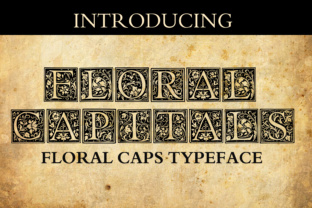
Floral capitals are ornate, decorative initial letters embellished with botanical motifs such as leaves, vines, flowers, and foliage. They blend typography with illustration, turning a single letter into a miniature work of art. Originating in medieval illuminated manuscripts, these custom letterforms have found new life in modern design, branding, wedding stationery, digital content, and educational resources. Whether you are a graphic designer looking to add a historical touch, a small business owner wanting to stand out, or a hobbyist exploring calligraphy, floral capitals offer a versatile way to elevate visual communication.
Understanding what floral capitals can do for your project depends on your goals, skill level, and the context in which you plan to use them. Not everyone will need the same level of detail or the same format. Below we explore how different audiences approach floral capitals and what to consider when deciding if they fit your needs.
What Exactly Are Floral Capitals?
At their core, floral capitals are drop caps or display initials where the letterform is intertwined with botanical elements. They can be hand-drawn, created with vector software, or sourced from digital font sets. Some are realistic and highly detailed, while others are stylized or minimalist. Designers sometimes use them as the first letter in a chapter, an opening word on a website, or as a standalone decorative element on a product label.
The key distinction from standard typography is the intentional integration of nature-inspired shapes. This gives the letter a unique personality and a sense of craftsmanship. Whether you purchase a ready-made alphabet, commission a custom set, or learn to draw your own, floral capitals can be adapted for print, web, or even embroidery.
Graphic Designers and Creative Professionals
For designers, floral capitals serve as a formal or romantic accent in branding projects. They work well for florists, garden centers, wedding planners, organic food brands, and any business that wants to convey elegance or natural themes. A designer might use a floral capital on a logo, a menu header, or a social media graphic to create an immediate visual anchor.
Ease of use matters here. Vector-based floral capital sets (SVG or EPS) allow for scaling without losing quality, and they can be recolored to match a brand palette. Many designers prefer modular sets where each letter comes with interchangeable floral elements, offering flexibility without starting from scratch. Cost varies widely: free public-domain sets exist, but premium collections with multiple styles and detailed ornamentation often range from $10 to $50 per alphabet. Reliability is high when using well-tested fonts or files, but be cautious of low-resolution raster images meant for print.
Practical example: A freelance designer creating a wedding invitation suite can use a floral capital "L" for the couple's last name as the focal point. Pairing it with a clean sans-serif body font keeps the design balanced and readable.
Educators and Calligraphy Enthusiasts
Teachers and learners value floral capitals for their historical and instructional significance. In a classroom setting, a lesson on medieval manuscripts or decorative typography often starts with these ornate letters. Beginners can trace or copy simple floral capitals to practice hand-eye coordination and learn about composition. More advanced calligraphers might use them to explore color blending, shading, and negative space.
Learning value is high. The process of drawing floral capitals teaches patience, attention to detail, and an understanding of how ornamentation can complement (or overwhelm) the base letterform. For educators, a set of reference images or a step-by-step guide can save preparation time. Cost can be minimal—free tutorials on YouTube or blog posts provide enough material for several lessons. Speed is not a priority here; instead, the focus is on creativity and skill development.
Practical example: A high school art teacher creates a project where each student designs a floral capital of their own initial. The final letters can be assembled into a class banner, reinforcing both lettering skills and teamwork.
Small Business Owners and Entrepreneurs
For a business owner, the main concern is commercial value and presentation. A floral capital can be used on product packaging, a storefront sign, or a thank-you card insert. The goal is to make the brand memorable and visually appealing without sacrificing clarity. Entrepreneurs who aren't designers often need a solution that is quick to implement—such as a pre-made floral font that installs in minutes.
Ease of use and speed become top priorities. Look for OpenType fonts with stylistic alternates so you can switch between different flower designs for the same letter. Long-term usefulness matters too: a well-chosen floral capital style should remain effective across seasons and product lines. Avoid overly complex designs that may not scale down well on small labels.
Practical example: A soap maker uses a floral capital "H" (for "Herbal") on every label. The consistent letter ties all products together, and customers recognize the brand even from a distance.
Hobbyists and DIY Crafters
Hobbyists enjoy floral capitals for personal projects: bullet journal covers, handmade cards, scrapbooks, or even embroidery patterns. The main draw is flexibility and creative expression. Many hobbyists start by printing out a free floral capital and coloring it with markers or watercolor. Others trace the design onto fabric for stitching. The learning curve is low if you choose simple outlines.
Quality and cost are often balanced: you can find high-quality public domain floral alphabets (from sources like the Internet Archive) and use them for non-commercial projects. Presentation matters for final crafts—choosing the right paper or thread color can make the floral capital pop. Beginners should start with thicker lines and limited detail until they build confidence.
Practical example: A scrapbooker creates a title page for a garden-themed album using a floral capital "G". She prints it on watercolor paper, paints it with soft greens and pinks, then layers it with dried flower petals for texture.
Ease of Use
If you are not comfortable with graphic design software, look for ready-to-use formats like PNG with transparent backgrounds, or simple coloring pages. If you are an experienced designer, vector formats or custom fonts give you more control. Test how the letter reads at small sizes—some floral capitals lose legibility below 24px.
Cost
Free options are abundant but often come with limited character sets (only A-Z, no numbers or punctuation) or lower resolution. Paid collections usually include multiple file types, extended glyphs, and support. Evaluate whether you need a full alphabet or just a single letter. For a one-time project, a single-letter SVG might cost $3–5; for a complete branding package, consider an investment of $20–50.
Quality and Reliability
Quality depends on the artist's skill and the file format. Hand-drawn scans can look charming but may have inconsistent line weights. Vector art is crisp and scalable. Check reviews or sample files before purchasing. For commercial use, ensure the license covers your intended application (print run size, merchandise, etc.).
Long-Term Usefulness
A floral capital style that feels trendy today might date your brand in a few years. Classic botanical motifs (vines, simple roses, leaves) tend to age better than very detailed, realistic flowers. If you are building a brand, consider a style that can be adapted—for instance, a capital letter that works equally well on a website header and a shipping box.
Creativity vs. Presentation
Some users (educators, hobbyists) prioritize creative exploration; others (business owners, marketers) need polished presentation from the start. Identify your primary goal. If you are experimenting, allow yourself to try multiple styles. If you are producing for a client, stick with proven designs that are legible and visually cohesive.
How to Decide if Floral Capitals Match Your Project
Start by asking: does the decorative letter enhance or distract from your message? Floral capitals work best when the subject itself ties to nature, tradition, or elegance. For a tech startup or a law firm, they might feel out of place. For a wedding blog, a botanical subscription box, or a historical novel, they add immediate charm.
Next, assess your skill level and available tools. If you can edit vector files, you have the most flexibility. If you only have basic image editing software, look for high-resolution PNGs or simple JPGs that you can layer. If you prefer analog methods, printed templates are ideal. No matter your approach, there is a floral capital resource that can match your needs.
Finally, consider scale. One large floral capital as a hero element can be stunning; using them for every letter of a headline often becomes overwhelming. Use them sparingly as accents to preserve their impact. When chosen thoughtfully, floral capitals can transform ordinary typography into something memorable, personal, and beautiful.